Invoicing from monday.com: how far the boards actually take you
monday.com has no native billing or invoicing. Teams build it anyway, out of columns and automations. Where that works, where it breaks, and what to do instead.
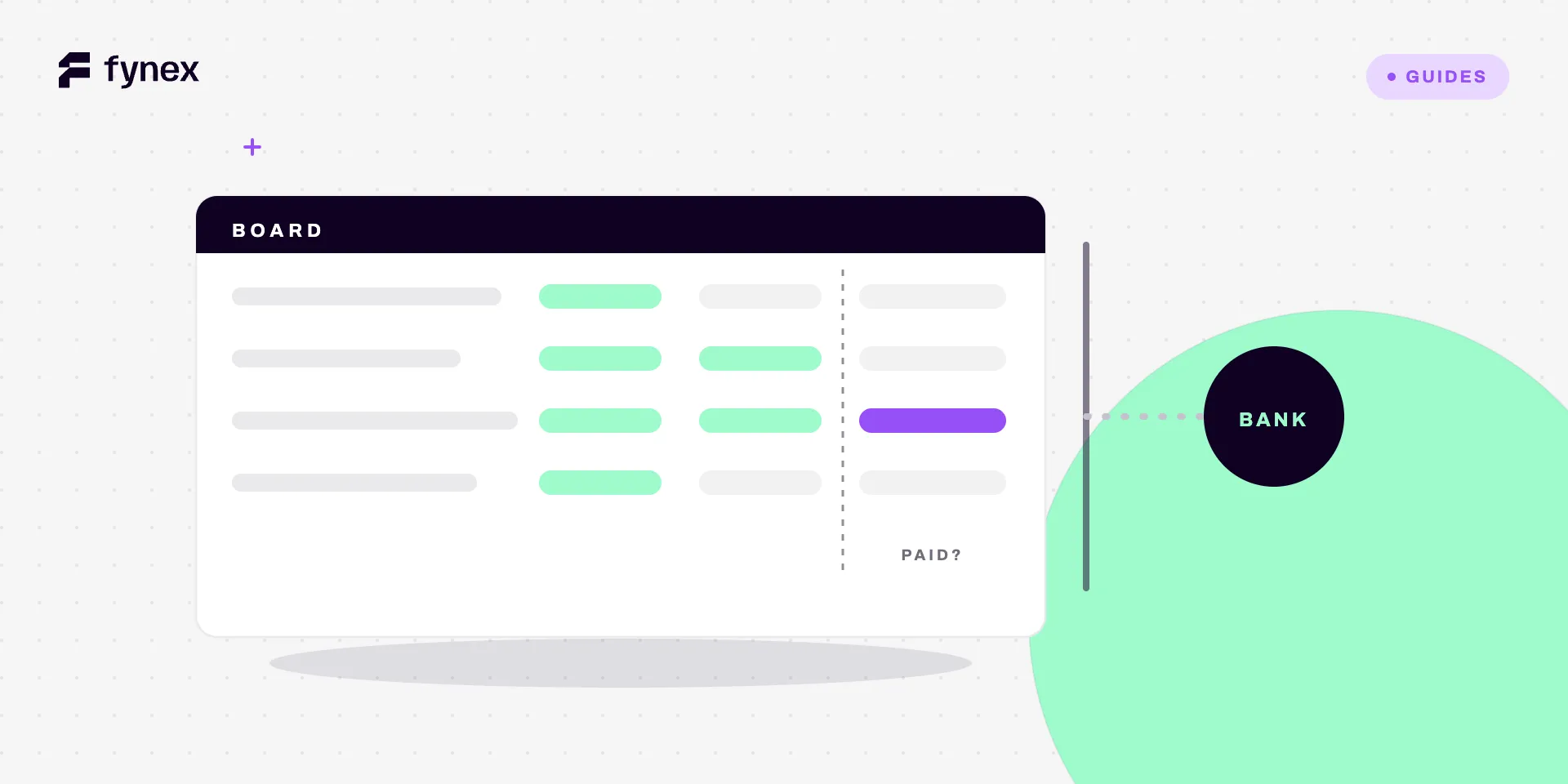
monday.com has no built-in invoicing, billing or payment follow-up. It was never meant to — it is a work management platform.
That does not stop anyone. Teams build billing on monday.com constantly, out of status columns, formula columns and automations, because the work is already tracked there and moving it somewhere else feels absurd. The instinct is sound. The results are mixed in a specific and predictable way.
What works well
Genuinely well, not as a compromise:
Knowing what is billable. The board knows a job’s stage, who did what, and when it was delivered. That is the hardest question in service billing and monday.com answers it natively, because it is the same information the delivery team already maintains to do their jobs.
Triggering the billing moment. An automation on “status changes to Delivered” that creates an item on a billing board, notifies whoever raises invoices, and starts a clock — that is monday.com doing exactly what it is designed for, and it removes the most common failure in service businesses: work that is finished and never billed.
Visibility for non-finance people. A delivery lead can see at a glance which of their jobs are awaiting billing. In an accounting system they could not, because they do not have a login and would not know where to look.
Chasing internally. Reminders, escalations, ownership. monday.com is good at making sure a human does a thing.
Where it breaks
1 · A board row is not an invoice
A row with an amount is a record of intent. An invoice is a document with legal and tax properties: a sequential number, a tax point, a VAT treatment, correct entity details, defined payment terms.
Businesses that “invoice from monday.com” almost always mean the board records what should be invoiced, and the actual invoice is produced elsewhere. That is fine — until the two disagree, which they will, because nothing enforces agreement between them.
2 · The board cannot know if it was paid
This is the fundamental limit, and no amount of column configuration gets around it.
A status column reading Paid reflects the last time someone manually changed it. It has no connection to a bank account. It is an assertion, not an observation.
So the board’s view of what customers owe is always a lagging, human-maintained approximation of the truth. Everyone treats it as authoritative because it is the screen they look at, which means the moment somebody forgets to update it, decisions get made on a number that is wrong.
3 · Drift, and then two versions of the client relationship
The board is updated by delivery. The ledger is updated by bookkeeping. Nothing forces them to agree.
A scope change gets captured on the board and not in the invoice. A credit note is raised in the accounts and never reflected on the board. A payment plan is agreed by email and recorded in neither.
None of these are dramatic on the day. Within a quarter the two systems hold materially different views of the same client, and the difference is discovered during a difficult conversation — which is the same three-systems-disagree problem with monday.com playing the CRM role.
4 · Formulas are not accounting
Formula columns computing totals, tax, discounts and margins are spreadsheet logic living in a work board — with the same weaknesses. No audit trail on the formula itself, no validation preventing someone overwriting a computed cell with a typed value, no reconciliation against anything.
It is a spreadsheet with better permissions, and it becomes load-bearing the same way.
5 · Nobody reconciles it
The decisive one. A billing board is a financial record that no process checks against reality.
The accounting system gets reconciled to the bank because someone has to close the books. The board gets reconciled to nothing. It can be wrong for a year and the only symptom is decisions quietly made on bad numbers.
The division of labour that works
Decide which system is authoritative for which question, then build across the gap deliberately.
monday.com owns the work:
- What was scoped, what was delivered, when
- Whether something has become billable
- Who is responsible for the next step
- Internal chasing and escalation
The accounting system owns the money:
- The invoice document, its number and tax treatment
- The receivable and its age
- Whether payment has arrived
- Anything that appears in statutory reporting
The connection between them should be one-directional and automatic. monday.com signals this is now billable. The accounting system produces the invoice and owns everything after that. Payment status flows back to the board for visibility — as a read-only reflection, never as something a human maintains by hand.
The moment someone can type “Paid” into the board, the board has started lying and nobody knows when it began.
The honest failure mode
The reason teams build billing on monday.com is not laziness. It is that the alternative genuinely is worse in the ways that are visible.
The accounting system does not know when work was delivered. It does not notify the project lead. It has no view a non-finance person can use. So the board fills the gap, because a gap that hurts every day beats a principle.
The right response is not to ban it. It is to be precise about which parts of it are load-bearing — and to make sure the parts that determine what a customer owes are connected to something that actually knows whether money arrived.
Where Fynex fits
Fynex sits between the work and the money, which is exactly the gap the billing board is improvising over.
When work becomes billable, the invoice is raised — with its proper number, terms and tax treatment — without someone copying a row into another system. When money arrives, it is matched to that invoice automatically, so paid is an observation rather than an assertion someone remembered to type. When an invoice ages past its terms, it escalates on its own.
monday.com goes back to being what it is genuinely excellent at: running the work. It stops being asked to also be a ledger, a chaser and a source of truth about money it has no way of seeing.