Your VAT return doesn't match your ledger. Where to look, in order
The VAT return figure and the control account disagree. The seven usual causes, ranked, and the checks that find each one before you file something you can't defend.
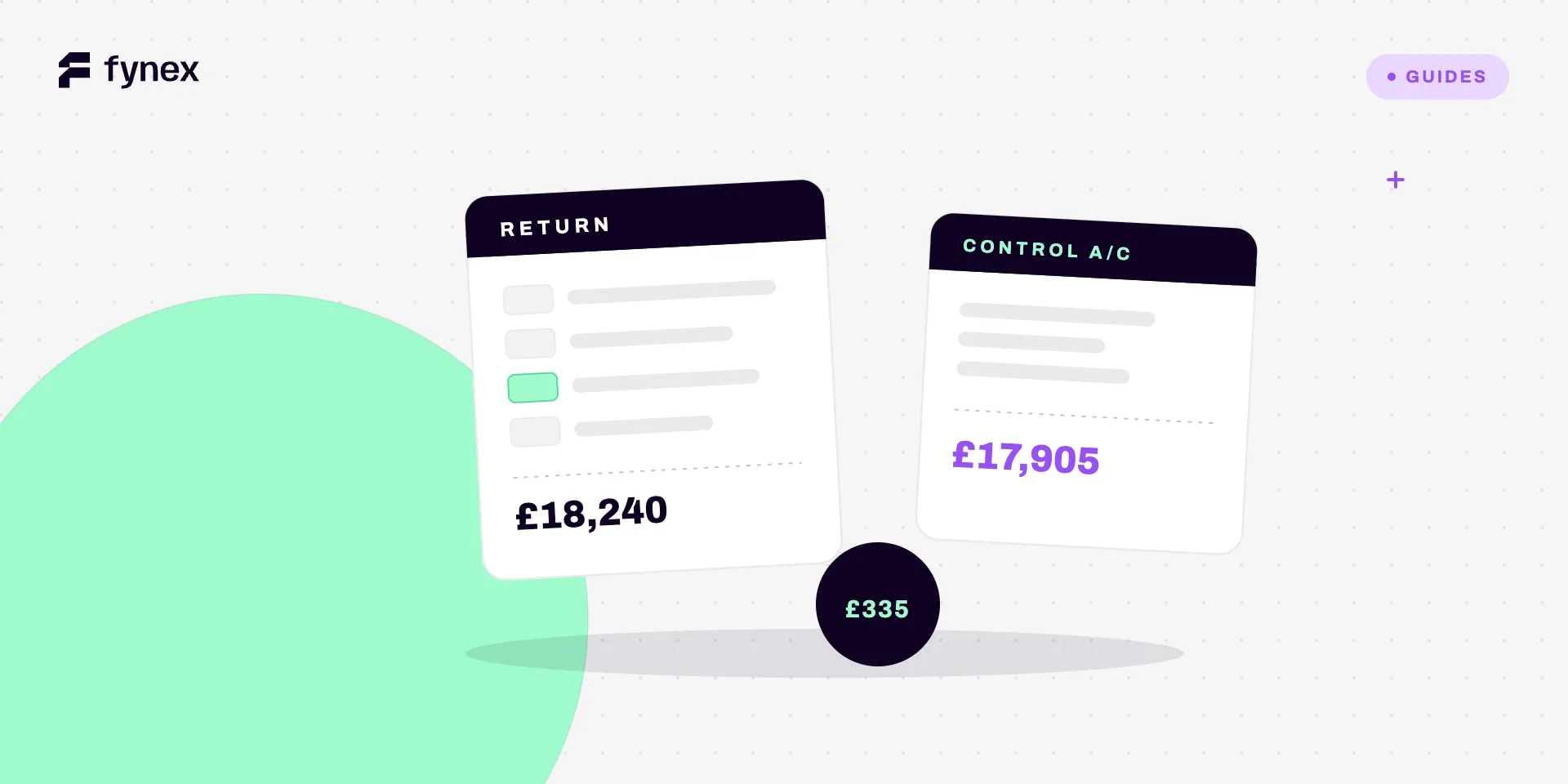
The VAT return says one figure. The VAT control account says another. The deadline is in four days.
This is one of the least pleasant reconciliations in bookkeeping, because unlike a bank difference you cannot simply investigate until it clears — there is a filing date attached. So the order you check things in matters more here than anywhere else.
Before anything: are you comparing like with like?
Two configuration questions cause more VAT mismatches than every transaction-level error combined, and neither is findable by searching the ledger.
Which basis is the software on? Under standard accrual VAT accounting, the tax point is generally the invoice date. Under the cash accounting scheme, it is the date money moves. If your software is set to one basis and you are checking against a report prepared on the other, the two figures will never agree, and no amount of transaction hunting will explain why.
Which period does the control account actually cover? The return covers a fixed quarter. The control account carries a running balance, which includes the previous quarter’s liability until that payment is posted. If last quarter’s payment has not been recorded — or has been recorded to the bank without clearing the control account — the balance is out by exactly the previous liability.
Check both before you look at a single transaction. Together they account for a large share of “the numbers don’t match” situations, and they take two minutes.
The seven causes, in order
1 · Backdated transactions in a closed period
Someone entered an invoice dated into a quarter whose return has already been filed. The ledger now includes VAT the return did not.
This is the single most common real cause, and it is nobody’s fault in particular — an invoice arrives late, someone dates it correctly, and the correct date is in a period that is closed.
The check: run a transaction list for the previous quarter, filtered by entry date rather than transaction date. Anything entered after the return was filed is your difference.
The prevention: lock the period once the return is filed. Most systems support this and most businesses do not use it.
2 · The wrong VAT code
Zero-rated coded as exempt. Standard-rated coded as zero. Reverse-charge treated as ordinary input tax.
These do not always change the total — which makes them worse. A mis-coded transaction can leave the headline figure correct while the boxes of the return are wrong, and box-level errors are the ones that attract questions.
The check: run VAT by code for the period and look for anything with an unusually small number of transactions. A code with two entries in a quarter is usually a mistake rather than a genuinely rare treatment.
3 · Unallocated payments under cash accounting
If you are on cash accounting, VAT falls due when money moves — and the system can only recognise that when the payment is allocated to an invoice.
Cash sitting unallocated on a customer account is invisible to the VAT calculation. So the money is in the bank, the sale has happened, and the return does not include it.
This makes unallocated cash a VAT problem as well as a bookkeeping one, and it is why the unallocated-payments gap is worth clearing monthly rather than annually.
4 · Credit notes in the wrong period
A credit note raised in the current quarter against an invoice from the previous one. Legitimate, common, and it makes two consecutive returns disagree with their control accounts in equal and opposite directions.
The check: list credit notes and compare each one’s date against the date of the invoice it credits. Cross-period pairs are your explanation.
5 · Manual journals that touch VAT
Someone posted a journal directly to the VAT account — often to “fix” a previous difference.
Manual journals frequently bypass the VAT return logic entirely, changing the control account balance without changing the return. Each one makes the following quarter harder, and a business that has been doing this for two years has a control account balance that means nothing at all.
The check: filter the VAT control account to journal entries only. Every one needs an explanation.
6 · Duplicates
The same purchase invoice entered twice, or entered manually and imported again from a feed. Input tax is claimed twice.
Same detection method as everywhere else: sort by amount, not by date. See duplicate transactions for why this is the fastest check in bookkeeping.
7 · Foreign currency and rounding
Invoices in another currency converted at one rate for the ledger and another for the VAT calculation. Individually tiny, collectively a nagging few pounds that never resolves.
Worth identifying so you can stop looking for it, but rarely worth chasing to the penny if the amount is immaterial and consistent.
The order to work
- Confirm the basis — cash or accrual, and that your comparison report uses the same one.
- Confirm the control account starting position — has the previous liability been paid and cleared?
- Look for entries made after the last filing with dates in the closed period.
- Run VAT by code and scan for outliers.
- Check credit notes that cross periods.
- Filter the control account to journals.
- Sort by amount for duplicates.
Steps 1 and 2 resolve most of these. Steps 3 to 7 handle the rest and take an afternoon, not a week.
The one thing not to do
Do not post a balancing journal to make the numbers agree.
It is tempting, particularly with a deadline approaching, and it converts a visible problem into a permanent invisible one. The control account now contains a figure nobody can explain, every subsequent quarter inherits it, and the next person to reconcile this account — possibly you, possibly an inspector — has no way to unpick what happened.
If you genuinely cannot find the difference before the deadline, file on the best figure you can defend, document what you know, and keep investigating. An error found and corrected is a normal event. An error concealed by a journal is a different kind of problem.
Why this is annually painful
VAT is a quarterly settlement of decisions made daily. Every coding choice, every allocation, every date typed slightly wrong is a small commitment, and the return is where three months of them are examined at once — with a deadline, and usually by someone who was not present for most of them.
Nothing about that is inherent. The same checks run monthly cost a fraction of the effort, because a month’s worth of transactions is small enough to see. The reason they are not run monthly is that nobody has a reason to until the deadline arrives — which is precisely the dynamic that makes the quarter-end version so expensive.
Where Fynex fits
Fynex removes a large part of what makes VAT reconciliation hard: cash arrives already allocated to the invoice it settles, so the cash-accounting tax point is known at the moment of payment rather than inferred later from a bank line. Fees and deductions are recorded as themselves rather than as an unexplained shortfall against an invoice.
Exceptions surface when they happen — a payment that matches no open invoice, a deduction nobody expected, a short settlement — instead of accumulating quietly until a quarterly reconciliation goes looking for them.
The return still has to be prepared and filed. What changes is that it starts from a ledger where the payments have already been matched, so the exercise is a check rather than an investigation.